University of California San Francisco

Form, Function, and Intention

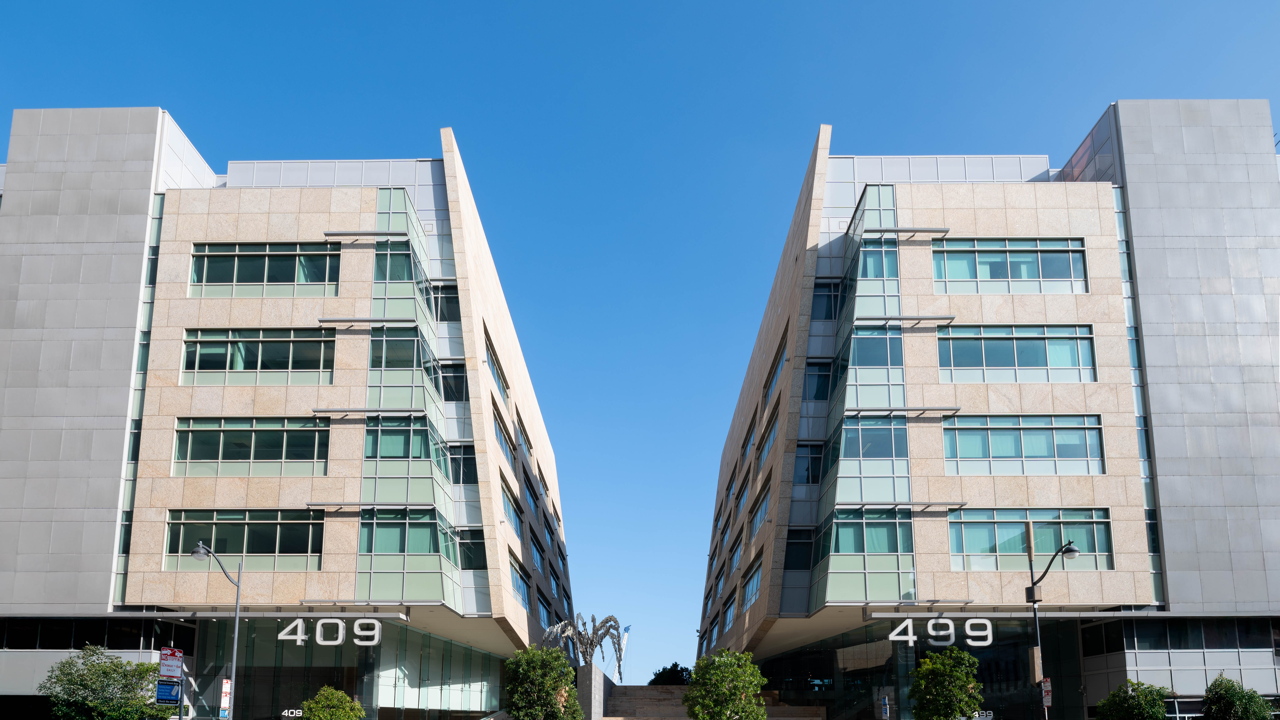
UCSF Dentistry is moving to a new home, so this is the ideal time to talk about how the spaces we live and work in affect what we do, and especially how we care for patients. A good place to start is by looking at a couple of famous building design principles.
In the 19th century, Louis Sullivan, the American architect who is considered the leader of modernism, said, "Form ever follows function." The purpose of something, and not just the models that came before, should guide design. For example, in the 1800s, when construction materials were primarily wood, iron, brick, and stone, buildings tended to be short and wide. But in the early 20th century, when steel replaced iron frames, buildings grew much taller and skyscrapers appeared in our cities. The buildings towering above the rest of the skyline were seen as monuments to success.
Form and Function Are One
Sullivan's assistant, Frank Lloyd Wright, had a different idea about form and function. Wright believed that his mentor's design principle was incomplete, and he expanded it into, "Form and function are one." When you see one of his buildings, you get a sense of how Wright achieved this unity. For example, he matched his buildings to the landscape. The Marin Civic Center stretches across a trio of hills, forming a bridge along their crest, with colors that match the surroundings.
By integrating structures with nature and creating open spaces, Wright emphasized transparency, flow, and human connection. Light and people move freely through his structures. You see this in the Civic Center where the skylight on the top floor provides light that allows trees and plants in the atriums to thrive on the floors below. Wright saw this as a way to underscore the idea that governments should be open and transparent.
In the 21st century, advancing technology is driving an evolving healthcare environment. As we prepare to move into our new home for UCSF Dentistry, we must ask not only how form and function work together, but what our deeper intention is, particularly in how we deliver care.
Technology will play a central role in shaping this balance. Digital health records, advanced imaging, and AI-enhanced tools are already transforming how we diagnose, treat, and communicate. More changes are in store as oral healthcare moves toward integration with overall healthcare. Our physical spaces must integrate technologies we use today, such as infrastructure for secure data systems. We also need flexible clinical layouts and environments that support patient care, education, and research. But they must remain adaptable and capable of incorporating advances we cannot yet predict.
Our ideas, and our vision for how to achieve them, become as important as the building materials.
What this means for us is that "function" is not a constant. Our goals can stay the same, but how we achieve them will shift as technology and methods change. Our ideas and our vision for how to achieve them become as important as the building materials.
That leads me to the question I kept returning to when I first walked through our new building at 409 Illinois Street: What is a school's primary purpose?
It is to welcome curious individuals.
We can create an environment that welcomes people who want to learn about patient care and research, and those who want to devote themselves to sharing their knowledge. In physical terms, this can mirror the way Wright created permeable spaces to let elements move freely. There can be clear sightlines in learning spaces where privacy isn't required, while carefully designed clinical areas ensure that patients receive care in private, technologically advanced settings. We can have common spaces where everyone, including those in different disciplines, comes together to share what they are working on.
Form and Function Follow Intention
Our school will also remain an educational home for our alumni. We can have dedicated space that welcomes people who come back to learn. Education does not end when you receive a diploma. The set of skills we learned ten or fifteen years ago becomes insufficient over time. All of us have to keep learning together, and that shared journey is something that we can house within the walls of our new school. Instead of following trends in oral healthcare, together we will discover them and share the lessons with the people who come to our school to learn with us.
That is the intention of our new home for dentistry. For educational building design in the 21st century, a new maxim we can apply is "Form and function follow intention." All of us will define the new school when we gather in our quest for knowledge, share it with others, and improve the health of our patients.
Just as tall skyscrapers were a symbol of success in the 20th century, the School of Dentistry's new home, with its thriving community of curious learners, will serve as a symbol of our commitment to the community, the state, and all of the patients we will serve now and into the future.
Michael S. Reddy, DMD, DMSc
Dean, UCSF School of Dentistry
Associate Vice Chancellor, Oral Health Affairs
Share this post


