University of California San Francisco

Reflecting on Recent Supreme Court Decisions

The recent Supreme Court decisions have distressed many in our society, including those within the UCSF family. In our busy lives, supreme court rulings often seem just part of the overall news background. If they don't affect us directly, we turn our attention to other events. But in a turbulent period of our country's history, the court's rulings seem to affect more of us in profound ways.
These were complex and large decisions and, compounding the shock, they were all released the same week: denying student debt relief; prohibiting the use of race as a factor in admissions; siding with a small business against same-sex marriage. Those personally affected by these decisions have been left rattled, and even fearful.
The rulings upset me personally, but upon reflection, I found it helpful to take a longer view. The recent court rulings will not be the final word on these issues and the Supreme Court is only one of three branches of government.
A bill in congress, The Equality Act, will amend the Civil Rights Act of 1964 and enshrine the civil rights of all Americans. When it is passed into law, no one will be excluded from public accommodations based on who they are or who they love. The executive branch also has many tools it can use to lessen the impact of the court's decisions. One example is the new student debt relief plan announced by the Biden administration the same day the Supreme Court ruled on the subject.
Institutions of higher learning have agency as well. In the years since California banned affirmative action with Proposition 209 in 1996, schools here developed different approaches to admitting students that represent our state's diversity. It's taken a long time to recover from the initial setback, but our state's schools are making measurable progress.
As mentioned in our June 29 statement on Supreme Court affirmative action ruling, the recent ruling does not affect the University of California directly but it will narrow the funnel of diverse students from other institutions who would apply to health professional schools for graduate education. We will help those schools that are directly affected by sharing the lessons we've learned. Our colleagues across the country will doubtless come up with ideas for solving this problem that have eluded us. Working together, we can reclaim lost ground.
The issue of student debt also impacts student diversity, and in the case of health profession graduates, greatly influences career decisions. As discussed in my July 6 Spotlight column "The Iceberg of Student Debt", graduates saddled with debt may be less likely to choose careers providing care in underserved communities or working in academic settings. In this way, the student debt issue affects us all.
When we read history, events unfold on the page in linear fashion because we are looking back at what has already happened. That is a simplified view of how life unfolds. Setbacks always follow progress. We have lost ground, but we have not changed direction. Our community will continue to progress toward an equal and just society.
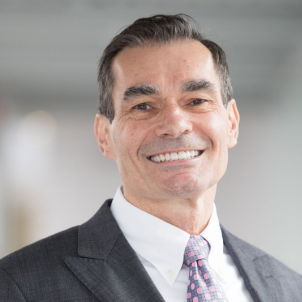
Michael S. Reddy, DMD, DMSc Dean, UCSF School of Dentistry Associate Vice Chancellor, Oral Health Affairs
Share this post


