University of California San Francisco

Precision in 3D: How Virtual Surgical Planning Improves Outcomes at UCSF
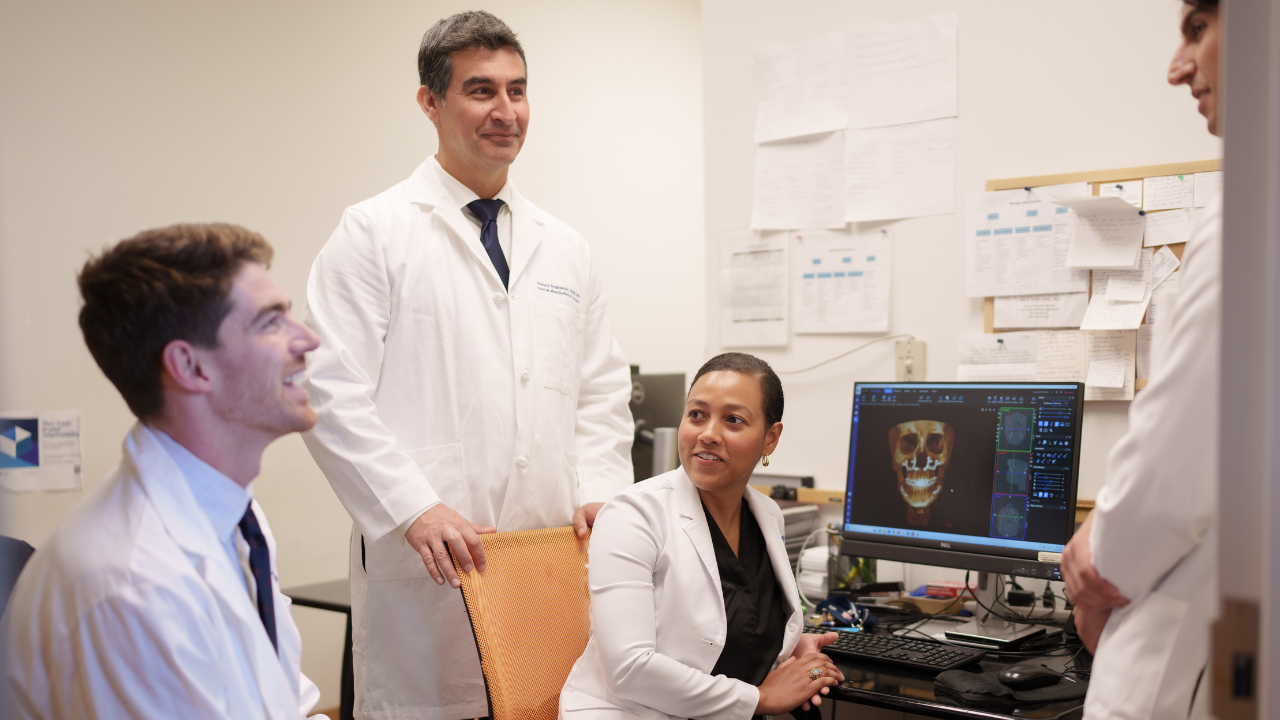
Virtual surgical planning (VSP) in oral and maxillofacial surgery is the use of three-dimensional (3D) imaging to plan complex surgical procedures such as corrective jaw surgery and reconstruction. This technology greatly benefits the surgical team by allowing them to better analyze and refine the surgical plan. In addition, the team can design and fabricate custom-made implants and components to increase surgical accuracy and improve patient outcomes.
Beyond patient care, this technology has also transformed how future surgeons are trained to perform complex jaw surgeries. At UCSF School of Dentistry's Department of Oral and Maxillofacial Surgery (OMFS), residents now learn to operate in a fully digital planning environment, integrating 3D imaging, custom fabrication, and data-driven precision into their surgical education from the outset.
OMFS began routinely implementing virtual surgical planning in 2015. More recently, the department began incorporating custom-fabricated surgical components designed for each patient. The main technologies that led to this advancement are specialized planning software, 3-D printing, high-quality Cone Beam Computed Tomography (CBCT) machines, and intraoral scanners to capture the arrangement of teeth.
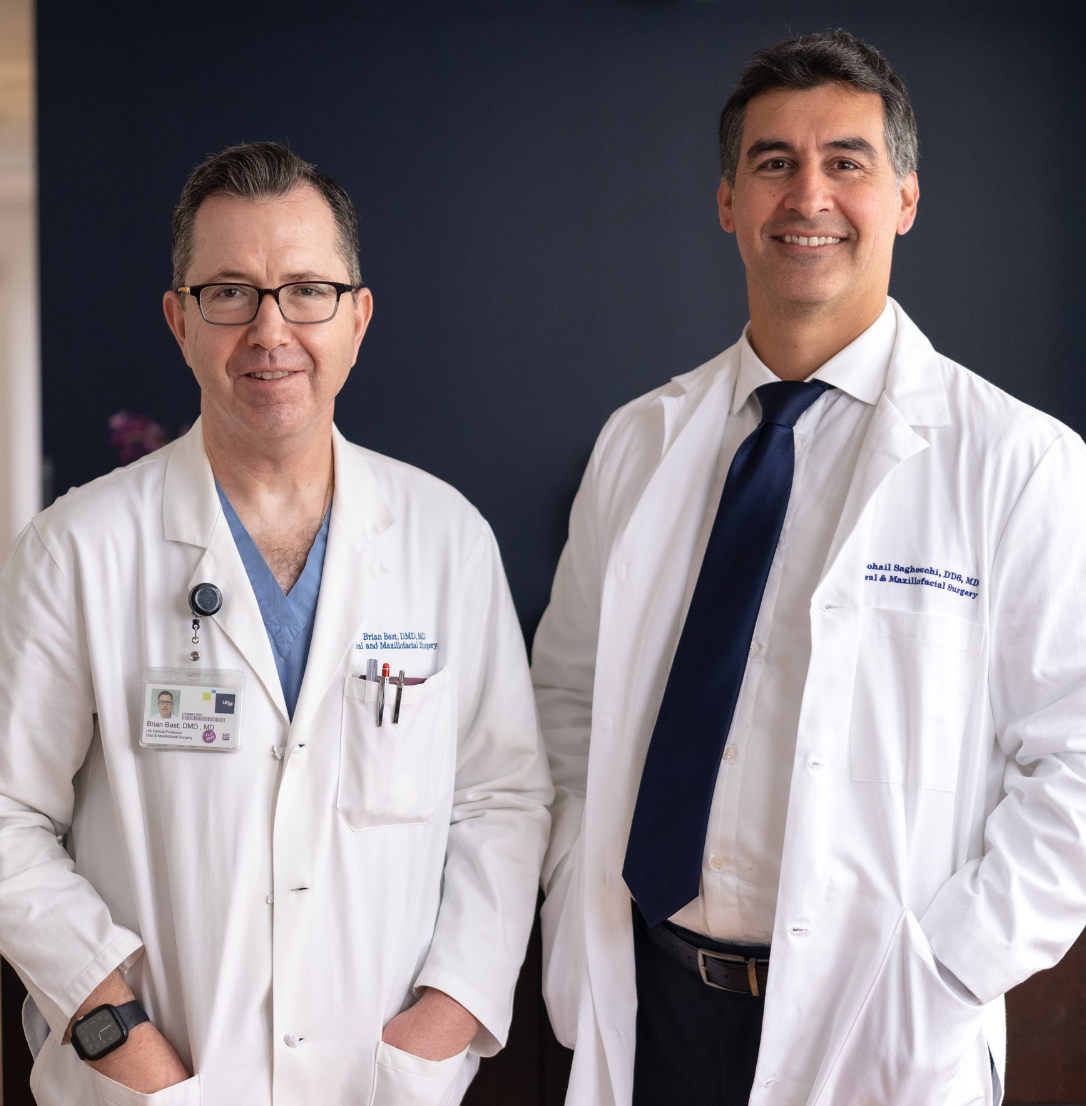
Sohail Saghezchi, DDS, MD, FACS, associate professor in OMFS, explained that the accuracy of the custom guides and plates used in VSP provides better surgical outcomes with fewer complications that could slow recovery times. In addition to these benefits for patients, VSP also saves surgeons a great deal of preparatory time.
"In the past, we had to plan our surgeries using stone models and basic measuring devices in order to fabricate a surgical splint that was made by hand," Saghezchi said. "This could take up to 3 to 4 hours of presurgical lab work for each patient case. Now, we are able to take a 3D X-ray and a scan of the patient’s teeth and upload this data to the planning software company. The surgery can then be planned digitally with an experienced engineer to a much higher level of precision and accuracy in less than 30 minutes."
This new process saves time during pre-surgical planning and ultimately reduces time in the operating room as well.
"Due to the learning curve, using custom-fabricated guides and plates may initially lengthen surgical time for a surgeon who is new to this method since the individual steps are somewhat different from traditional plating techniques," Saghezchi said. "However, after the initial learning period, custom-guided jaw surgeries reduce surgical time by meaningful amounts which often leads to better patient outcomes."
Saghezchi explained that the department collaborates with multiple reputable plating companies to manufacture the customized surgical components, and this digital workflow has reduced the space requirements in their clinic.
"This digital workflow process only requires a CBCT machine for the 3D X-ray and an intraoral scanner to accurately scan the teeth, which takes up much less workspace. This is more efficient than the previous techniques of taking multiple molds of the patient's teeth and pouring stone models in the lab in the back room of our clinic. Now, we hardly use the lab anymore, so it definitely saves space, as well as time."
Custom-fabricated guides and plates add cost to reconstruction and orthognathic surgery, which is one of the main limitations of implementing this more broadly to all providers and hospitals. Saghezchi believes the benefits are worth the increased cost.
"We are able to execute the planned surgery a lot more accurately," he said. "It leads to less time in the operating room, less postoperative swelling, and also better overall outcomes."
As VSP with custom guides and plates becomes the standard of care, Saghezchi is optimistic that the technology has the potential to be even better.
"I can see artificial intelligence advancing this and improving accuracy even more. We expect the costs to decrease over time, so more people will have access to this technology."
By Phil Tiso
Share this post


