A 2024 study published in Science Advance conducted over 30,000 field experiments with The Washington Post and Upworthy headlines. It found that readers prefer simpler headlines (more common words and more readable writing) over complex ones. They also paid more attention to and more deeply processed the simpler headlines.
The e-book headline in this example from OptinMonster is straightforward: 50 Smart Ways to Segment Your Email List. It uses a numeral (50), a helpful adjective (smart), and a second-person pronoun (your) to speak directly to the audience, all of which elevates the article’s value in the reader’s mind.
Explaining your product or service can get cumbersome, but it shouldn’t if you want the audience to quickly understand how your company can help solve their pain points.
In this example, Zendesk succinctly highlights three results gained by the enterprise clients of its customer service platform:
Drive better conversations
Maximize agent efficiency
Adapt faster to change
The three- and four-word headlines are followed by short explanations (two sentences) and a link to the product’s relevant features for that category.
Explaining your product or service can get cumbersome, but it shouldn’t if you want the audience to quickly understand how your company can help solve their pain points.
In this example, Zendesk succinctly highlights three results gained by the enterprise clients of its customer service platform:
Drive better conversations
Maximize agent efficiency
Adapt faster to change
The three- and four-word headlines are followed by short explanations (two sentences) and a link to the product’s relevant features for that category.
When you write something that’s unexpected, your audience will likely stop scrolling and take a moment to learn more. In the worst cases, this approach to content writing falls under the nefarious clickbait category. But in the best cases, it can delight and engage the viewer.
Nike is always a go-to source for the best content examples. The summer of 2024 didn’t disappoint with its Winning Isn’t for Everyone campaign.
With a debut in time for the global games, Nike featured the world’s greatest athletes (well, all the great Nike-sponsored athletes) talking about they are motivated by victory and that there’s nothing wrong with wanting to win. Writing those four words — winning isn’t for everyone — fosters a strong reaction. After all, there are far more people who don’t win than do. But audiences are also likely to watch more of the videos to learn what Nike is really talking about.
Testing last image
Creativity can emerge in many ways. Sometimes, it’s a simple starting point that reflects the times, as Dove did in its content example.
It also may lead a brand to contribute to its own pop culture trend as The Stanley did with its Quencher Cup social media campaign in 2024. Its influencer campaign prompted these fun user-generated examples of web writing and illustration in the form of memes and TikTok videos promoting the brand’s popular drinking vessel.
Hilarious Scales created this sample that’s been seen by over 10 million viewers:
On social media, though, the character parameters are greater, and you could improve engagement by falling short of the upper limits.
Instagram is a perfect example of where writing content short of the 2,200-character maximum caption is a better decision. In fact, experts say the ideal length is 125 characters, which takes up the space visible before the viewer must click to read more.
Still, sometimes writing fewer than 125 characters can work well and draw attention in a crowded feed, as this sample from Grammarly shows. Its caption — “Learn actionable strategies for leveraging Gen AI to elevate your team’s productivity.” — totals just 88 characters.
These are bottom of the funnel articles that follow our process of Pain Point SEO and stories that follow our content brand framework. Pain Point SEO means that we’re producing articles that are meant to come up when people search for terms related to the product we’re selling (and we thoughtfully sell the clients features, benefits, value propositions and differentiators within them).
They are full of carefully written sales copy about our clients products and services (how we do that is here). This is in contrast to most top of funnel content which intentionally doesn’t mention or sell anything and only gives advice. Content brand and case study articles are also meant to sell the value of the product or service through storytelling.
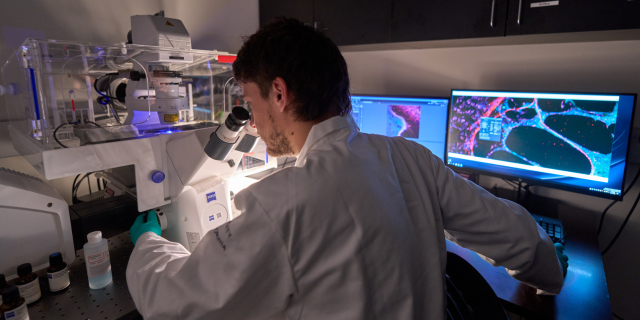
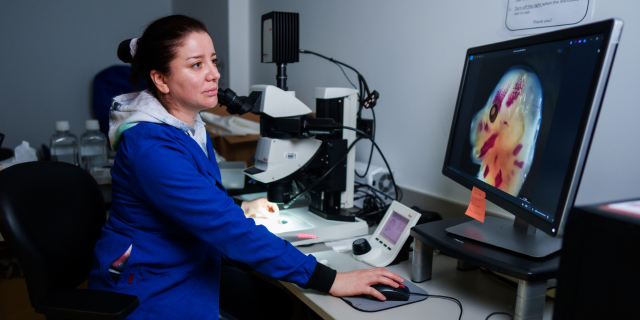
Faculty in the Department of Cell and Tissue Biology investigate basic molecular, cellular and tissue processes to achieve fundamental insights, and as a vehicle for understanding and treating disease .
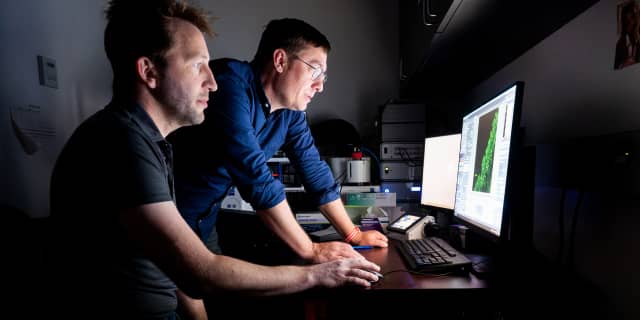
These highly-skilled researchers work collaboratively to study the cellular, molecular, regulatory, and evolutionary mechanisms underlying the development of the craniofacial complex, as well as important cartilage, muscles, and other tissues .
This interdisciplinary graduate program provides our students with the research tools and support to study craniofacial development, oral health, and disease processes and treatments .
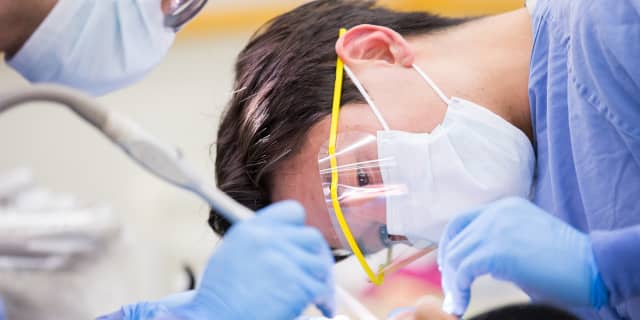
With a focus on basic, translational, and clinical research, UCSF’s world- renowned OMFS faculty and residents conduct studies in premier research hospitals and labs, advancing science and improving patient care .
The Global Oral Health Program develops, coordinates, and supports research, educational, and service initiatives within the School of Dentistry and beyond .
"I think we can do without [tobacco]": support for policies to end the tobacco epidemic among California adolescents
Tobacco Control
December 2025
Actomyosin contractility and a threshold of cadherin cell adhesion are required during tissue fusion
The Journal Of Cell Biology
November 2025
state 1
The way we’re able to write such high quality content is that all of our articles are produced via primary source interviews with subject matter experts in the client’s organization (our writing process, case study applying this).
This is in contrast to how most agencies produce content by hiring a freelance writer, giving them a topic and having them self-research the article. The issue with that method is that the reader (a qualified, experienced customer) often knows more than the person writing (a freelancer without subject matter expertise) — which leads to poor quality from the customer and company’s perspective.
The way we’re able to write such high quality content is that all of our articles are produced via primary source interviews with subject matter experts in the client’s organization (our writing process, case study applying this).
This is in contrast to how most agencies produce content by hiring a freelance writer, giving them a topic and having them self-research the article. The issue with that method is that the reader (a qualified, experienced customer) often knows more than the person writing (a freelancer without subject matter expertise) — which leads to poor quality from the customer and company’s perspective.
The way we’re able to write such high quality content is that all of our articles are produced via primary source interviews with subject matter experts in the client’s organization (our writing process, case study applying this).
T
The way we’re able to write such high quality content is that all of our articles are produced via primary source interviews with subject matter experts in the client’s organization (our writing process, case study applying this).
This is in contrast to how most agencies produce content by hiring a freelance writer, giving them a topic and having them self-research the article. The issue with that method is that the reader (a qualified, experienced customer) often knows more than the person writing (a freelancer without subject matter expertise) — which leads to poor quality from the customer and company’s perspective.hvjhghjgjhhjfghcgcghcgfhgfghfgg
z block with 2 buttons
Disruption stories and Brand/Founder stories are stories that share how a company is disrupting the status quo in their industry. We typically create these if a company has a unique process or approach to solving a problem.
For example, in the Vocal Video article linked below, you’ll hear the story of how creating testimonials used to be very expensive and meant having to fly somewhere to film someone in person — but with their software, you can now produce equal quality videos remotely and asynchronously.
Submission Period: Applications open for inputting information on May 9 and can be submitted starting June 1.
Deadline: Applications must be electronically submitted by 11:59 p.m. (EST) on October 1. Late applications will not be considered.
Tips: Begin your ADEA AADSAS application early to allow yourself ample time to complete it before the deadline.
Supplemental questions The UCSF-specific supplemental questions are included in the UCSF section of the ADEA AADSAS application. These biographical statement questions allow us to learn more about you as an individual:
What is important to you in selecting a dental school? How will you make your decision about which school to attend? (1,500-character limit)
Why do you want to join the UCSF community? Please state briefly how you will contribute to the UCSF School of Dentistry. (1,500-character limit)
Optional: Please use this space to tell us anything additional that you believe is relevant to your application for admission. (5,000-character limit)
Ensure you meet UCSF’s course requirements by visiting our prerequisites webpage.
On the ADEA AADSAS application
In the “Colleges Attended” section, report all institutions attended, including foreign institutions or study abroad programs.
In the “Transcript Entry” section, enter all courses taken. This includes foreign coursework if the ADEA AADSAS system allows it (note: this option is unavailable for most non-U.S. schools).
Request official transcripts from all U.S. and English-speaking Canadian colleges to be sent directly to ADEA AADSAS by October 1.
After admission If admitted, you’ll need to submit official transcripts directly to UCSF, as instructed.
Taking the DAT is a required step for all applicants.
Recommended timeline: Take the DAT no later than September 1 to ensure UCSF receives your scores by the application deadline of October 1.
Applications without DAT scores received by the deadline will be considered incomplete and will not be reviewed.
Score validity: Test scores are valid for two years. For the 2026 admission cycle, scores must be dated no earlier than January 1, 2023.
Average scores: The average DAT scores for our entering class are approximately 23 in both Academic Average and Total Science.
Submit three letters of recommendation via the ADEA AADSAS application.
College science professor
Dentist, adviser, researcher, or mentor
One letter can be from an individual of your choice
Alternatively, you may submit one composite letter from a pre-professional health advisory committee in lieu of the three required letters.
Deadline: All letters must be received by ADEA AADSAS no later than October 1.
Submit a non-refundable $75 USD fee via UCSF’s online payment system. Checks are not accepted.
Fee waivers
Status: All fee waivers for the 2025-26 admissions cycle have been awarded.
Fee waivers were granted on a first-come, first-serve basis for applicants with a verified ADEA AADSAS application.
If you submitted a fee waiver application, you should have received an email regarding its status.
Eligibility criteria for fee waivers Fee waivers are available to:
Students who have received the ADEA FAP.
U.S. Citizens, U.S. Permanent Residents, individuals qualified for AB540, and those qualified for DACA.
Applicants whose gross annual income is at or below 300% of the federal poverty guidelines.
Dependent vs. independent status
Dependent Students: Report your own and your parents’ financial information.
Independent Students: Report your own information (and your spouse’s, if applicable).
Family size and income guidelines Below are the ADEA poverty guidelines (300%):
Family Size - Income 1 - $45,180 2 - $61,320& 3 - $77,460 4 - $93,600 5 - $109,740
FAQ
Understsanding orofacial pain
You may not have heard the term “orofacial pain,” which simply means any pain that is felt in the mouth, jaws, and face. If you’re dealing with pain in these areas, it can help to see an experienced dental professional.
Orofacial pain (OFP) is a specialized field within dentistry that focuses on the diagnosis, management, and treatment of pain disorders affecting the jaw, mouth, face, head, and neck. OFP-related disorders include, but are not limited to:
Temporomandibular muscle and joint (TMJ) disorders
Jaw movement disorders
Nerve and neurovascular pain disorder
Headaches
Sleep disorders
Symptoms of OFP may include atypical pain, ringing in the ears (tinnitus), dizziness, muscular incoordination, and abnormal sensations such as itching or tingling in the head and neck region. Orofacial pain specialists also address unexplained or unresolved tooth pain following procedures like root canals, extractions, or implants.
An orofacial pain specialist is a highly trained dental professional recognized by the American Dental Association (ADA). This unique specialty is the only one sanctioned by the ADA for the precise diagnosis and treatment of orofacial pain. After completing dental school, these specialists undergo an intensive two- to three-year training program. To become board-certified, they must pass both a comprehensive didactic assessment and an oral examination.
Dental sleep medicine involves the collaboration of a multidisciplinary team of physicians, sleep medicine specialists, and surgeons. At our center, we focus on treating sleep breathing disorders, including obstructive sleep apnea (OSA), using a variety of oral appliances. Our expertise in temporomandibular structures ensures that we provide comprehensive care that addresses airway, sleep, and jaw health.
test contact
Get Care
Services we offer
Our experienced faculty and highly trained residents provide exceptional care for people with a range of conditions, including temporomandibular joint (TMJ) disorders, facial nerve pain, dental issues, headaches, injuries, and sleep breathing disorders such as obstructive sleep apnea.
Last day of summer course instruction (I/D2, I/D3, I/D4)
-
Final examinations – summer (I/D2, I/D3, I/D4)
-
Policies and standards
Technical standards
IDP students must meet UCSF’s technical standards for the DDS degree, which outline the essential abilities needed for safe, effective patient care. These include communication, motor and sensory skills, intellectual capacity, and professional behavior.
UCSF follows clear policies to guide a fair and holistic admissions process. Applicants should review requirements, deadlines, and professionalism standards to ensure their application is fully considered.